

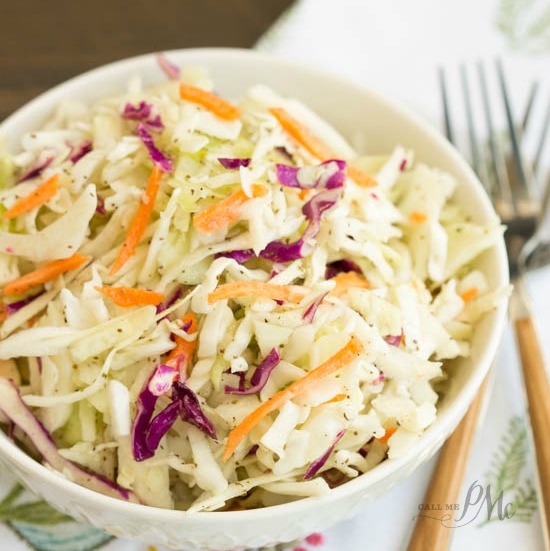
Ingredients
- 16- ounce bag shredded cabbage mix
- 1/4 cup green onions sliced, green part only
- Optionally use thinly sliced red onion, fresh or pickled.
- 1/2 cup white wine vinegar
- 2 tablespoons granulated sugar
- 2 tablespoons olive oil
- 1 teaspoon salt
- 1 teaspoon freshly ground black pepper
- 2 teaspoon celery seed
- *optional – 1/4 cup sunflower seeds or almonds 1 thinly sliced jalapeno
Instructions
- In a small bowl, whisk vinegar, sugar, olive oil, salt, pepper, and celery seed.
- Pour over cabbage mix and green onions. Toss.
- Refrigerate until ready to use.
- Keeps 3 days in the refrigerator.
Make it better. (?)
I am thinking of the classic "summer" side-dish. My personal preference is the vinegar variety, a tangy or "barrister's slaw", replacing the mayo with olive or vegetable oil. When I make mine though it lacks a "cohesiveness" and tends to get watery and separate in the 'fridge. How can I improve it without using mayo?
The “watery separation” is the bane of vinegar-based slaws. When you skip the mayo, you lose the chemical emulsifiers (eggs) that keep the oil and acid bonded. More importantly, the salt in your dressing acts as an osmotic pump, drawing water out of the cabbage cells and into the bottom of your bowl.
To get that “cohesive” barrister-style slaw without the creaminess, you need to address the physics of the cabbage and the chemistry of the dressing.
1. The “Pre-Wilt” (Crucial Step)
The reason your slaw gets watery is that the cabbage is “bleeding” after you dress it. With the “pre-wilt” method, you’ll likely find that the slaw stays crisp and unified for 3–4 days in the fridge instead of turning into a cabbage swamp by morning.
- The Fix: Place your shredded cabbage in a colander and toss it with a tablespoon of salt. Let it sit for 30–60 minutes.
- The Result: The salt draws out the excess water before you add the dressing. Rinse it quickly with cold water, then—and this is vital—pat it extremely dry or use a salad spinner. Now, the cabbage is “primed” to absorb your oil and vinegar rather than diluting them.
2. Create a “Mechanical” Emulsion
Since you don’t have mayo to hold the oil and vinegar together, you need a “bridge” ingredient.
- The Bridge: Add a teaspoon of Dijon mustard or a bit of honey/maple syrup to your dressing.
- The Science: Mustard contains mucilage, which acts as a natural emulsifier. Honey adds viscosity. Whisk your vinegar, mustard, and seasonings first, then slowly stream in your oil while whisking vigorously to create a thicker, unified vinaigrette.
3. Use “Warm” Dressing
If you want the flavors to truly penetrate the cabbage rather than just sitting on top (which leads to separation), try the hot dressing method.
- Bring your vinegar, oil, sugar/honey, and spices to a light simmer in a small pan.
- Pour the hot liquid over your (pre-wilted and dried) cabbage and toss.
- The Result: The heat slightly softens the cabbage’s waxy exterior, allowing the dressing to “lock in.” As it cools in the fridge, it will set into a cohesive, marinated side dish rather than a puddle of liquid.
4. Flavor Balancing (The “Barrister” Profile)
To keep it sharp but “deep,” consider these tweaks:
- The Oil: Use a neutral oil (grapeseed or avocado) if you want the vinegar to shine, or a high-quality olive oil if you want a peppery, “heavy” finish.
- The Acid: Mix your vinegars. A blend of Apple Cider Vinegar (for fruitiness) and White Distilled (for that classic sharp bite) usually beats a single-vinegar profile.
- Aromatics: Celery seed is the “secret” ingredient in most classic non-creamy slaws. It provides an earthy, savory backbone that mimics the complexity of a cooked dish.